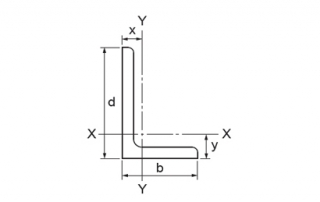
Single-Angle Members in Compression

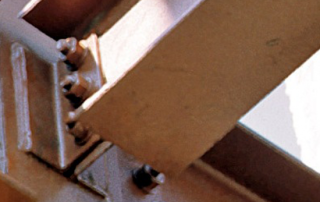
As stated in the Commentary to S16-14, the slenderness expressions provided in Clause 13.3.3 for ‘Single-Angle Members in Compression’ are not intended for use in the calculation of compressive resistance of single angles used as diagonal braces in a braced frame. When single-angle braces are used in a braced frame, they typically serve as tension-only braces [...]

2017-04-03T12:57:08-04:00October 7th, 2016|Tags: |

Navigating the New Handbook

Since the first edition of the CISC Handbook of Steel Construction published in 1967, commonly used design tables and data have been printed on coloured pages for easy reference. Handbook users are familiar with the yellow colour used for beam shear connections, green for column tables, and blue for beam tables. This colour scheme has remained [...]

2017-04-03T12:57:00-04:00September 30th, 2016|Tags: |

Composite Beams in Building Structures

In consideration of ultimate limit states of composite beams in service alone, full composite design generally results in the lightest beam sections. Partial composite capacity, however, usually suffices because factors other than the ultimate limit states of the composite beam often dictate the steel beam size and the percentage of composite shear connection. These factors are: [...]

2017-08-01T16:20:56-04:00September 27th, 2016|Tags: , |

Anchor Rods And Erection Safety

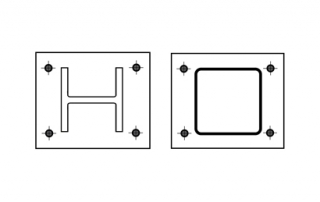
Clause 25.2 of the CSA S16-14 states that “columns shall be fitted with at least four anchor rods. When four non-colinear anchor rods for erection safety are not feasible, special precautions shall be taken.” The requirement for a minimum of four anchor rods aims to ensure erection safety. The rods should be positioned to provide an [...]

2017-04-03T12:56:48-04:00September 16th, 2016|Tags: , |

Snug-Tightened High-Strength Bolt Assemblies

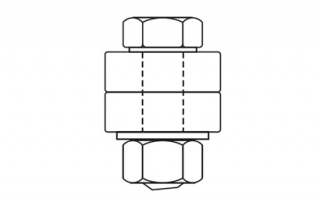
Snug-tightness is the tightness that is attained with a few impacts of an impact wrench or the full effort of an ironworker using an ordinary spud wrench to bring the connected plies into firm contact. The applications for which pretensioned instead of snug-tightened bolt assemblies are required can be found within Clause 22.2.2 of the S16-14: [...]

2017-08-01T16:22:33-04:00September 13th, 2016|Tags: , |

Tension-Only Bracing

Braces in a tension-only braced frame are designed to resist, in tension, 100 per cent of lateral shear forces in the braced frame. Since the resistance of braces acting in compression is ignored in the design, tension-only braced systems must be direct-acting and concentrically braced frames. Over the last 25 years, ductile design provisions for tension [...]

2017-04-03T12:56:29-04:00September 2nd, 2016|Tags: |

Minimum Size of Fillet Welds

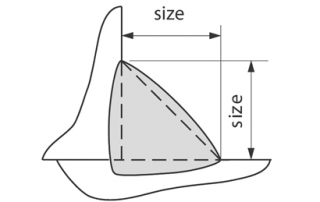
The minimum size of a fillet weld as measured should comply with Table 4.4 of CSA W59-13, unless a larger size is required to provide the calculated weld resistance. The long-standing code provision for minimum fillet size aims to reduce the cooling rate. The presence of hydrogen and fast cooling are major contributing factors for cold [...]

2017-04-03T12:56:24-04:00August 26th, 2016|Tags: , |

Knife Edge Connections

Knife edge angle connection, commonly known as knife connection, is a very common type of beam shear connection. It features a pair of angles that are typically welded to the column in the shop and bolted to the beam web in the field (Figure 1). While knife connection serves as a popular beam shear connection, its [...]

2017-04-03T12:56:16-04:00August 19th, 2016|Tags: , , , |

CISC Certification vs CSA A660 – Which One Do I Specify?

In accordance with the National Building Code, steel building systems shall be manufactured by companies certified to CSA A660 “Certification of Manufacturers of Steel Building Systems.” A steel building system (SBS) features steel for the structural components plus related accessories engineered and designed as a total building system, commonly referred to as “pre-engineered buildings” for which [...]

2017-04-03T12:55:53-04:00August 15th, 2016|Tags: , , , |

ASTM F3125 – A New Bolt Standard

A325 and A490 bolts are household names. What are F1852 and F2280?   ASTM A325 AND A490 BOLTS are the high-strength bolts used for structural applications in North America. Their twist-off type counterparts are F1852 and F2280, respectively (Figure 1). ASTM standards A325M and A490M cover the metric versions (although metric bolts are rare). Generally, bolt [...]

2017-09-11T11:22:30-04:00July 29th, 2016|Tags: , , , |
Go to Top