
Structural Steel Castings

More and more components in steel structures are lending themselves to steel castings, simply due to the numerous benefits offered. Steel castings not only provide a seamless finish, ideal for architecturally exposed structural steel (AESS) applications, but the benefits from a structural design standpoint are also of value. A cast steel node may be a junction [...]
2017-04-03T12:58:18-04:00February 7th, 2017|Tags: , , |

Members Subject to Axial Tension and Bending

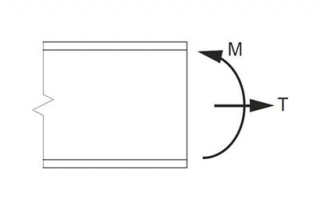
Steel members subject to combined axial tension (T) and bending moment (M) can occur in steel trusses and other applications. For such cases, and for Class 3 sections in particular, Clause 13.9 provides a pair of interaction equations: where S is the elastic section modulus, and A is the cross-sectional area. Engineers are sometimes puzzled by [...]

2017-04-03T12:58:12-04:00January 16th, 2017|Tags: , |

Influx of Fire-Rated Steel Designs Without Load Restriction

Recently, many new and updated cUL fire-rated design listings for common steel floor and roof assemblies have been added to the UL Directory. These comprehensive cUL design listings are valid for use in Canada without load restriction. Following extensive fire testing and research studies, these design listings were released to cover assemblies and members for common [...]

2017-04-03T12:58:02-04:00December 16th, 2016|Tags: |

NBC 2015 Simplified Force Procedure for Low Seismicity

In order to simplify the procedure for determining earthquake loads and effects in regions of low seismicity, a simplified static procedure has been introduced in National Building Code of Canada 2015. In this article, the force magnitude of a building in terms of the base shear, as determined in accordance with this simplified procedure, is compared [...]

2017-04-03T12:57:57-04:00December 2nd, 2016|Tags: , |

CISC Structural Steel EPDs

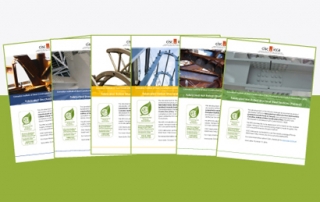
The CISC has developed 6 verified & registered industry average Environmental Product Declarations (EPDs) for structural steel that are available from authorized CISC fabricator members. Click here for more information on CISC Structural Steel EPDs

2017-04-03T12:57:50-04:00November 18th, 2016|Tags: |

Global Standards Scramble to React to Non-Conforming Material

Reputable global EPCs (Engineering, Procurement, Construction ) operating in Canada know something that you may not. They are mandating that all steel used on their projects be produced/rolled in North America. They claim to be doing this because of trust (or the lack thereof) of global material supply. In a global market place that seems pretty [...]

2017-04-03T12:57:41-04:00November 14th, 2016|Tags: |

The CISC Project Solutions Service

CISC PROJECT SOLUTIONS SERVICES: Helping you select the most efficient and economical structural framing solution for your next project! CISC PROJECT SOLUTIONS SERVICES A complimentary service provided by our in-house team of structural engineers and technical specialists at the CISC Solutions Centre. We will provide a fully customized and comprehensive conceptual steel design package that will [...]

2022-03-02T11:41:48-05:00November 11th, 2016|Tags: |

CISC’s new Steel Section Dimensions App is now available on Google Play and the Apple App store!

Steel Section Dimensions provides the main section dimensions (d, b, t, w) of structural steel shapes listed in the CISC Handbook of Steel Construction, 11th Edition. Dimensions can be displayed in metric or imperial units. The available steel shapes include: W, HP, M, S, C, MC, L (equal and unequal-leg), HSS (Square, Rectangular and Round) produced [...]

2017-04-03T12:57:28-04:00November 4th, 2016|Tags: , |

ASTM F1554: A Standard for Anchor Rods

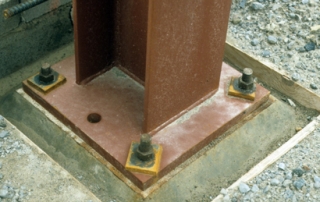
ASTM F1554 covers three grades of anchor rods: Grade 36 (248 MPa), Grade 55 (380 MPa) and Grade 105 (724 MPa). The vast majority of anchor rods (as defined in CSA S16-14) are used to position, level and secure base plates for concentrically loaded gravity columns. Note: The expression “anchor rod” has replaced “anchor bolt” in [...]

2017-08-01T16:51:51-04:00October 21st, 2016|Tags: , , |

Availability of Structural Steel in Canada

Designers must consider material availability when specifying section sizes, particularly for the heavier sizes in a nominal size range, and for small quantities of the less commonly used sizes. As regional availability of steel products varies, information on the availability of particular sizes can be obtained from either local steel fabricators, producers, and service centres. The [...]

2017-08-01T16:52:21-04:00October 14th, 2016|Tags: , , , , |
Go to Top