

The Canadian Institute of Steel Construction is proud to host the Architectural Student Design Competition. Each year, the competition aims to introduce students to the use of exposed structural steel and show the design potential of formal expression, detailing and surface finish. Winners and finalists receive cash prizes, including $8,000 for the first prize Award of Excellence.
Winners will be announced August 31st
2025-2026 CISC Architectural Student Design Competition
2025-26 Competition Theme
Students enrolled in Canadian Schools of Architecture and Engineering are invited to design a structure that demonstrates how steel performs under tensile and compressive loads, highlighting its efficiency, aesthetics, and its unique advantages. Steel is an excellent structural material to address tensile forces and can be very economical when members are appropriately sized.
The primary structure must be fabricated from Architecturally Exposed Structural Steel (AESS), with specific reference to the Categories and Characteristics as described in the CISC AESS Guide. Detailed references are available through the competition website.
The site is to be located in Canada to the specific discretion of the student team.
| 1st Prize – Award of Excellence | student team (1) $8,000 faculty sponsor $2,000 |
|---|---|
| 2nd Prize | student team (1) $4,000 faculty sponsor $1,000 |
| 3rd Prize | student team (1) $2,000 faculty sponsor $500 |
Proposals will be verified for conformity. Valid proposals will be scored individually by each jury member according to the 5 criteria listed below. The jury will meet in a final round to select, amongst the 10 finalist projects who received highest score, the 3 Prizes of Excellence.
Scoring and judging will be based on the following criteria:
• Aesthetics and ingenuity
• Incorporation of competition theme
• Use of structural steel
• Constructability (specification of steel sizes and shapes)
• AESS finish
The aim of the competition is to introduce students to the use of architecturally exposed structural steel and show its design potential through formal expression, detailing and surface finish.
Proposals must exclusively use steel in the design of the structure and for surfaces where appropriate. The design must demonstrate an understanding of the properties and possibilities steel has to offer.
The competition theme requires students to:
• design a structural frame with steel elements
• design constructable connections
• collaborate with a steel fabricator to choose the steel members and their connections
Collaboration between designer(s) and fabricator(s) is encouraged to familiarize students with the industry and allow them to develop a realistic and constructable proposal.
Students and faculty sponsors are encouraged to seek advice and guidance from a local steel fabricator to help chose the right steel sections and detail the design. CISC can suggest names of steel fabricators, on request.
The competition is open to all current full-time students (individually or in teams of a maximum of 3) registered in a Canadian school that offers an accredited or non-accredited program of architecture or architecture / engineering of that is at least 3 years in duration.
Each student team should register and identify a primary contact for the team. A faculty professor is endorsing the individual or team must be provided. Teams that include students in engineering are encouraged to participate.
The competition may be conducted as part of a design studio project under the direction of a faculty sponsor or as an independent extracurricular self-directed project. In all cases, winning entries and their faculty sponsor will receive the stipulated prize.
To register, go to the CISC website (https://www.cisc-icca.ca/architectural-student-design-competition/) and select Registration. Create an account, complete and submit the registration form. Registration allows students to receive Q&A and be informed of latest competition updates.
To submit your proposal, click on the link received in your registration confirmation email or go to the CISC website (https://www.cisc-icca.ca/architectural-student-design-competition/) and select Submission. Simply log into your account and attach a single project file in PDF format.
All entries must be received by 5:00 p.m., ET on June 15, 2026.
2025-26 Jury Members

A civil engineer by training, Sylvie Boulanger obtained her bachelor’s degree from the University of Alberta, a master’s degree in structures from the University of California (Berkeley), and a doctorate from EPFL (Switzerland). Her main area of expertise for 30 years has been structural steel.
At the Canadian Institute of Steel Construction (CISC), she led the development of the national documents on Architecturally Exposed Structural Steel (AESS). As vice-president with Supermétal (Canam-Structures), she specialized in multi-story structures and bridges. Projects included the 30-storey Manulife Building (Montreal), the 47-storey Diagrid Office Tower (Bogotá, Colombia), Turcot Interchange Bridges (Montreal), Temporary Towers for Main Cable-Stayed Span of New Champlain Bridge (Montreal).
She was Senior Director at the Jacques Cartier and Champlain Bridges Corporation (JCCBI). She is currently an independent consultant with MTB Consulting and member of the CSA S6 bridge code.

Andrew Voth is an associate structural engineer at RJC Engineers in Toronto specializing in design and performance of unique steel structures. He has gained local and international design experience working on a wide range of residential, retail, commercial, and entertainment structures including London’s 20 Fenchurch Street office building, Square One Shopping Centre South and West Expansions and the Canadian Museum for Human Rights in Winnipeg.
In addition to delivering the over one-acre elevated pedestrian park and adjoining pedestrian bridge as a part of the CIBC Square project in Toronto, he is currently leading the design of the Peter Gilgan Mississauga Hospital, one of the largest healthcare projects in Canada.
Andrew received his doctorate from the University of Toronto with focus on the behavior and design of connections to round hollow structural sections. He is currently a member of CSA S16 Design and Construction of Steel Structures –Standards Development Technical Committee.
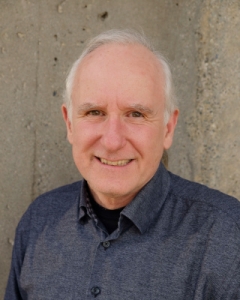
Andy Metten is a structural engineer in the Vancouver-based structural engineering firm of Bush, Bohlman & Partners LLP. Over the past decades, he has been the design engineer on several buildings and bridges, including the Vancouver International Airport and the U.S. Terminal in Nassau, Bahamas and the Skytrain Fraser River crossing at New Westminster. Andy is still involved on special projects.Andy Metten has practised structural engineering since graduation from the University of British Columbia with a bachelor’s degrees in Civil Engineering in 1978 and a master’s degree in structural engineering in 1981. He is currently a member of the Standing Committee for Seismic Design for the National Building Code of Canada and a member of the S16 structural steel design committee for Canada.
Since 2002, he has also taught an evening structural steel design course offered by the Structural Engineers Association of BC (SEABC) the notes from that course have now evolved into the textbook “Structural Steel for Canadian Buildings” which is used by both EITs and an undergraduate textbook at several universities.

Founder, principal designer and a LEED accredited professional at rose architecture, Owen is originally from Vancouver and has been living in Montréal since 1996. Having completed his Professional Masters of Architecture at McGill University in 2001, he continues to develop his knowledge of sustainable design along ‘ecosensual’ lines.
Owen has had a number of social and citizen implications for many years. He was a Board Member of the Montréal Urban Ecology Centre (2004-2015 and President from 2007-2012 and 2013) and a Board Member of the Conseil Régional de l’Environnement de Montréal (2009-2015). He was also member of the comité de l’Agora métropolitaine dans le cadre du Plan métropolitain d’aménagement et de développement (PMAD) (2011-2016). With the Urban Ecology Centre, he participated in the publication of four research reports on the integration of green roofs in Montréal, a publication on urban vines (green walls) and a publication on urban agriculture.
Owen was Vice-President of the Comité consultatif d’urbanisme (CCU) of the Plateau-Mont-Royal Borough (2010-2016). He is presently member of the Groupe de travail sur les toitures végétalisées (GTTV) of Bâtiment durable Québec and was named member of the Board of the l’Autorité régionale de transport métropolitain (ARTM) in 2017.
Since 2016, Owen is an invited studio professor at the School of Architecture of the Université de Montréal.

Nicolas Demers-Stoddart joined COEX in 2025, bringing over 15 years of architectural experience across award-winning civic, infrastructure, and heritage projects. Known for his contemporary design sensibility and strategic leadership, he now plays a key role in advancing COEX’s design excellence across all sectors.
Before joining COEX, Nicolas served as design lead on numerous large-scale projects, including the National Assembly of Québec, recipient of the Governor General’s Medal in Architecture in 2022. His infrastructure portfolio includes the architectural signature for the Louis-Hippolyte-La Fontaine Tunnel, urban development planning for the Jacques-Bizard Bridge, schematic design for the Alexandra Bridge replacement, as well as the reconstruction of the chemin des Quatre-Bourgeois Viaduct and the design of the Darwin Bridges. His ability to navigate complex programs with cultural and historical significance continues to distinguish his work.

Peter Steunenberg started working in the steel fabrication industry right out of high school as a draftsman in July of 1977 in his father’s company. Working through the ranks in detailing, project management, estimating, then as general manager in 1994 and owner in 2008.
Today, Peter is heading down the path to retirement and in 2025 partnered with his daughter and son-in-law, and is now fulfilling the role of sales manager.
Solid Rock Steel is an award winning custom architectural structural steel fabricating and erection company with full in-house detailing & painting capabilities, in the local Vancouver area. Solid Rock Steel celebrated its 60th Anniversary in 2025.
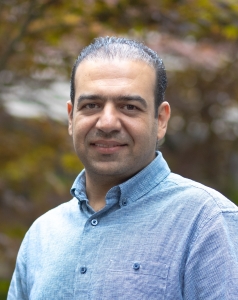
Farzan Farzaneh is the Vice President Sales, Engineering, and PMO of Marcon Metalfab. He joined the company in 2016, bringing over 20 years of prior project management experience across complex projects in construction, oil & gas, energy, power plants, civil infrastructure, and transportation sectors.
Throughout his career, Farzan has specialized in steel fabrication and installation projects, successfully managing technically demanding initiatives while ensuring high standards of quality, efficiency, and delivery. Known for his strong problem-solving abilities and technical expertise, he has played a key role in improving operational processes and implementing organizational systems.
Farzan holds an MBA, a bachelor’s degree in Traffic and Transportation Engineering, and an Associate degree in Mechanical Engineering. He is also a certified Project Management Professional (PMP) and a member of the Project Management Institute (PMI). In addition, he has many years of experience providing project management training and consulting services to various organizations.
2024-2025 Architectural Student Design Competition Winners

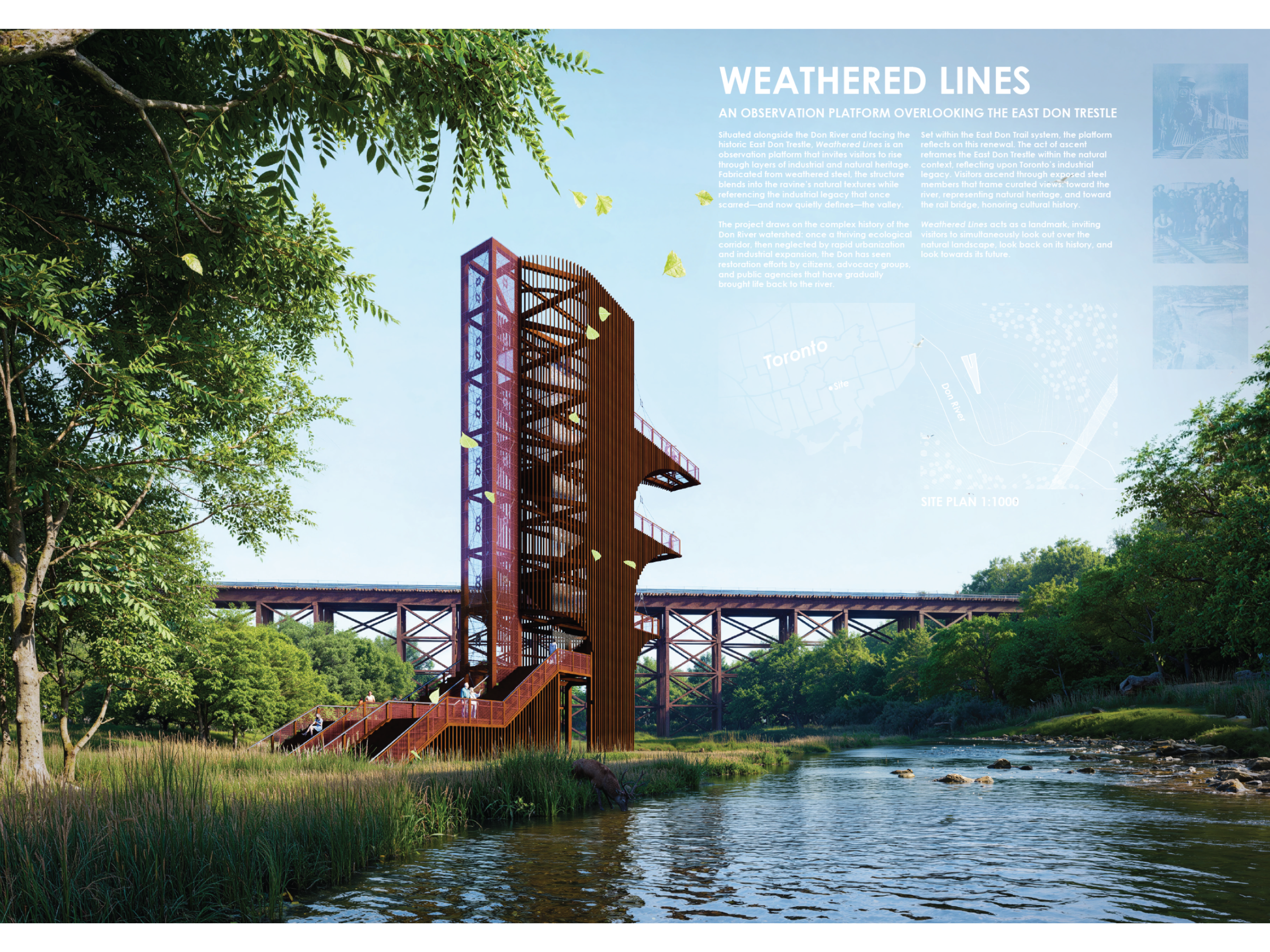
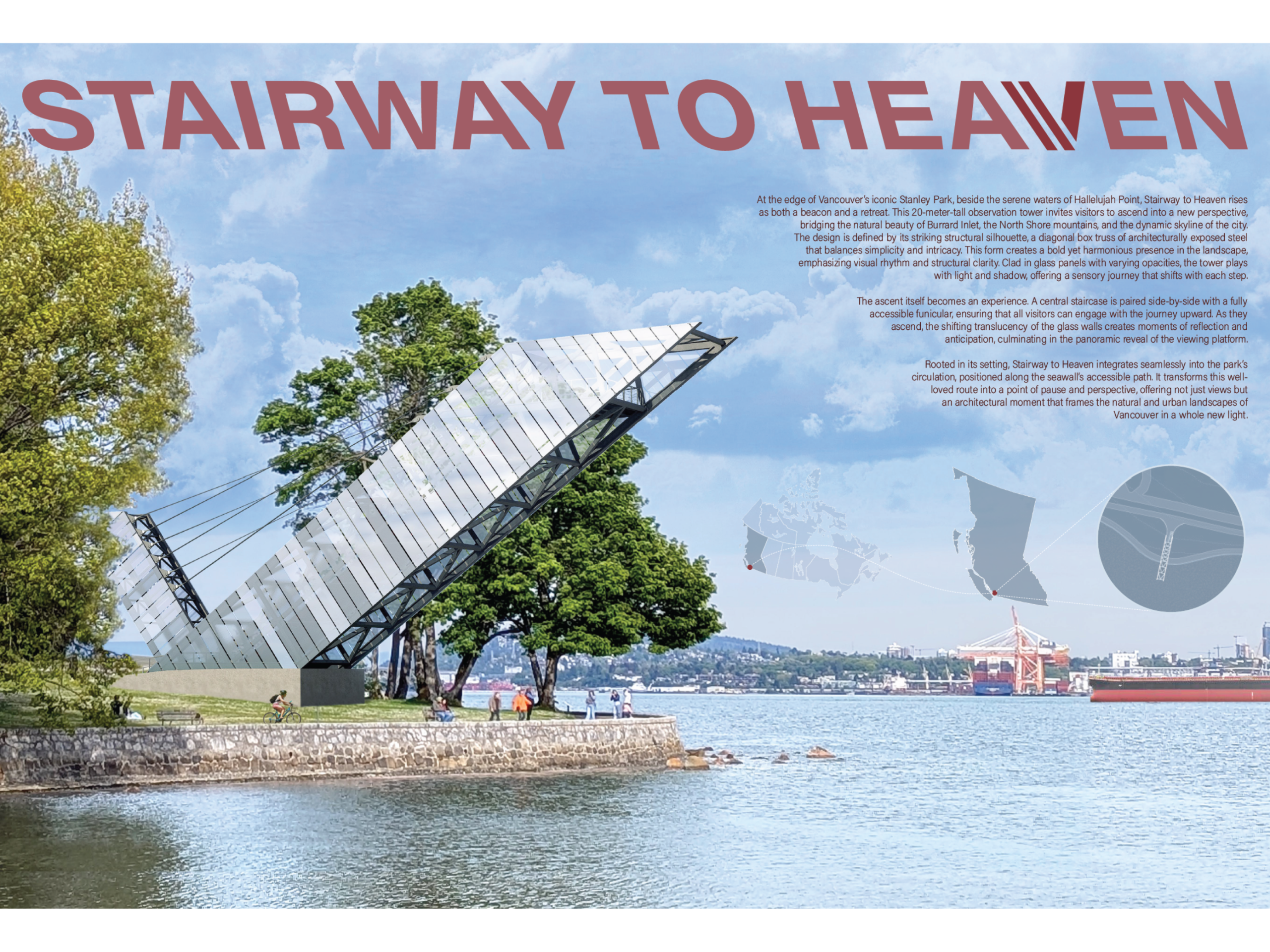
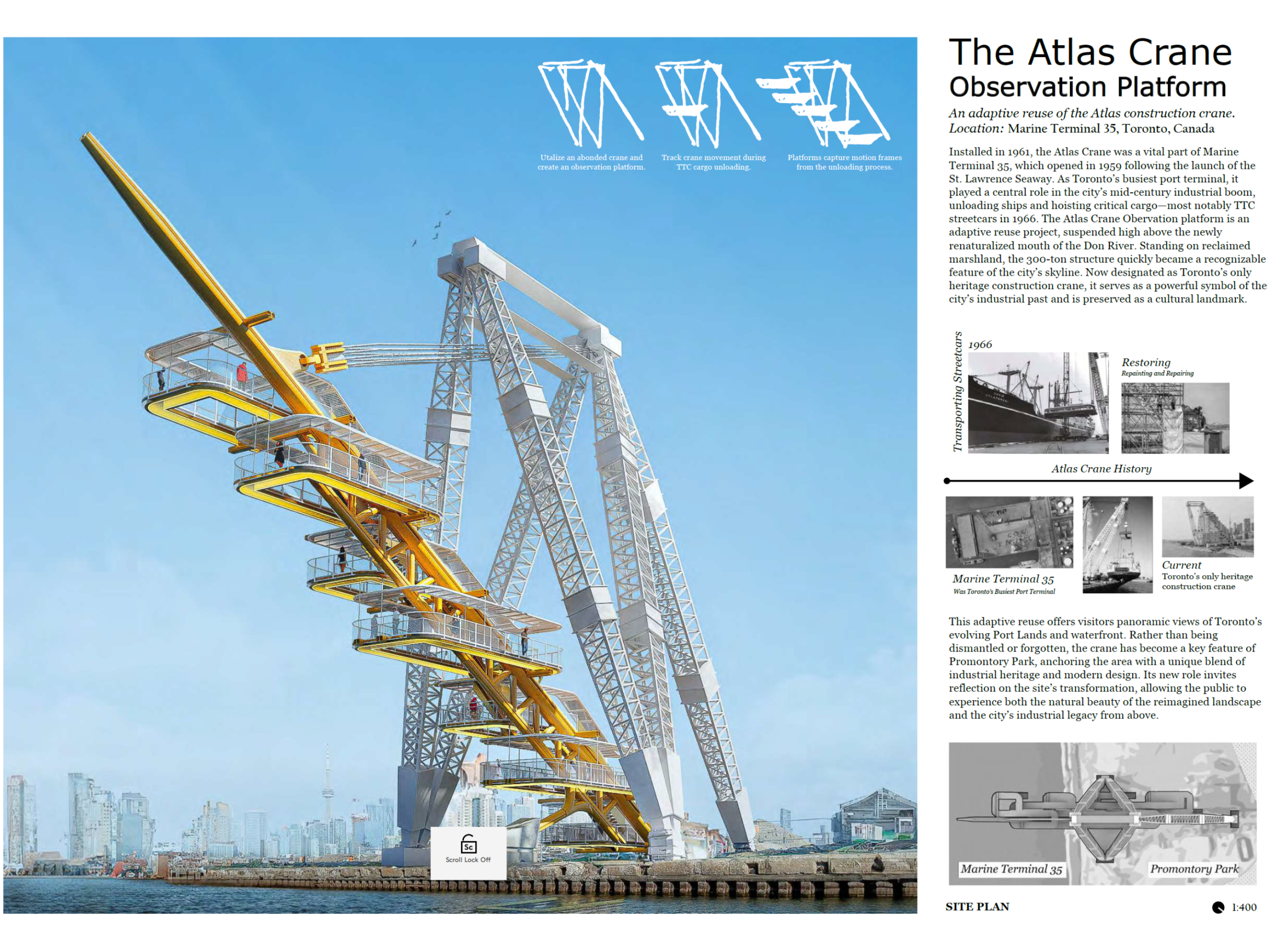
Winners
Title |
Student(s) |
University |
Faculty Sponsor(s) |
Award |
| Competition Winner | Darren Miranda & Sophie Longval |
University of Waterloo | Terri Meyer Boake | Award of Excellence |
| Runner Up | Cindy Ma & Mahara Falif | University of Waterloo | Terri Meyer Boake | 2nd Prize |
| Third Place | Yev Stepanyuk & Sadie Berzins | University of Waterloo | Terri Meyer Boake | 3rd Prize |
| Honourable Mention | Jake Levy | Toronto Metropolitan University | Vincent Hui | Honorable Mention |